
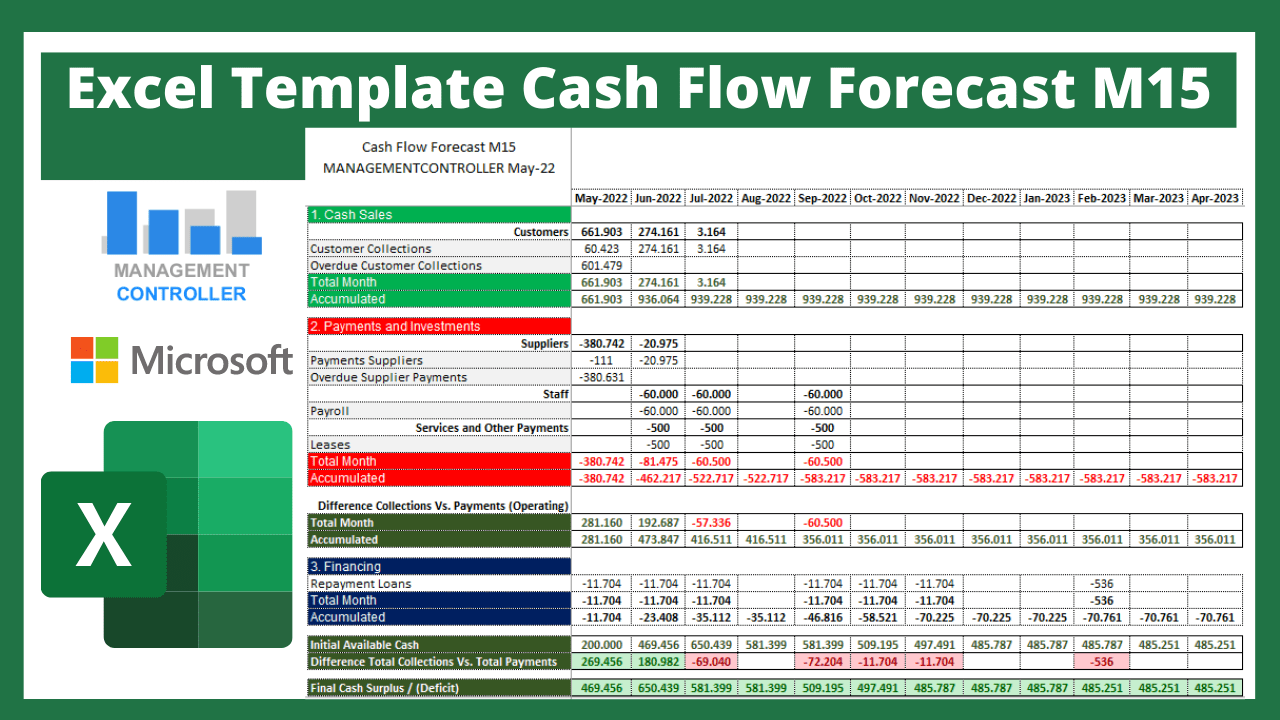
Anticipate the Future of Your Company’s Liquidity
Are you facing uncertainty about your company’s available cash?
Do you experience constant liquidity tensions?
Do you lack a clear vision of your future funds to make key investment or financing decisions?
If the answer is yes, you urgently need a reliable Cash Flow Forecast system — one that gives you control, visibility, and peace of mind.
Why a Cash Flow Forecast Report Is Essential
Many profitable companies suffer from cash flow problems despite having positive results.
Their funds are shrinking, liquidity is tight, and financial stress increases each month.
If the current situation is worrying, how will it look in the next three months?
Do you know how long your company can hold out with current resources?
Or how much financing you’ll need to stay afloat?
The Excel Cash Flow Forecast Template M15 is designed to help you anticipate liquidity gaps, plan actions in advance, and ensure the financial survival of your business.
The Solution: Excel Cash Flow Forecast M15
This professional Excel-based cash flow forecasting model is tailored to your company’s data and needs.
It allows you to:
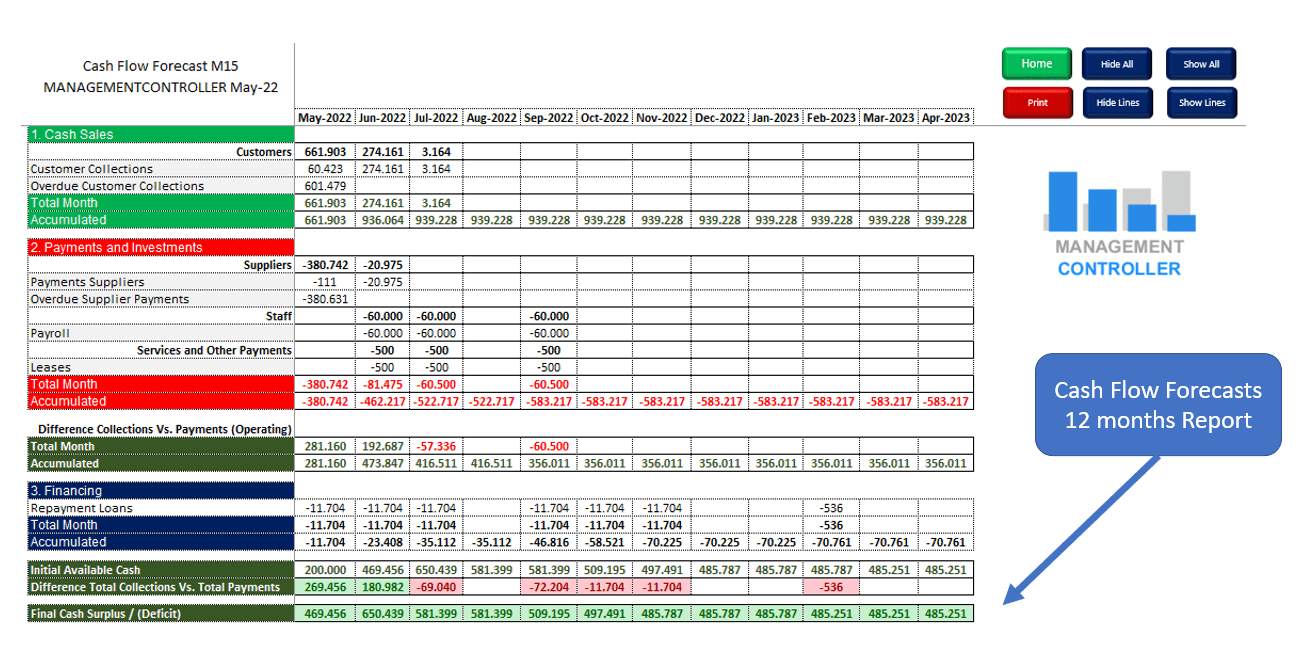
✅ Forecast liquidity month by month for the next 12 months
✅ Simulate different financial and operational scenarios
✅ Consolidate multiple companies in one report
✅ Make strategic decisions with confidence
An agile and efficient system, fully adaptable to your ERP (Odoo, SAP, Sage, Navision…), which saves you time and prevents errors in complex linked spreadsheets.
Common Problems When Building a Cash Flow Forecast
Building a professional cash flow report may seem simple — but it rarely is.
Here are the most common problems companies face:
1️⃣ Data dispersion: information comes from multiple sources (ERP, Excel, banks…), leading to broken links and unreliable formulas.
2️⃣ Manual updates: every month, formulas and links must be manually adjusted, wasting hours or even days.
3️⃣ Missing variables: many forecasts ignore future recurring payments, taxes, or loan repayments, generating uncertainty and wrong decisions.
Key Variables Included in the M15 Cash Flow Forecast
The Excel M15 template consolidates all relevant financial data into one powerful model:
-
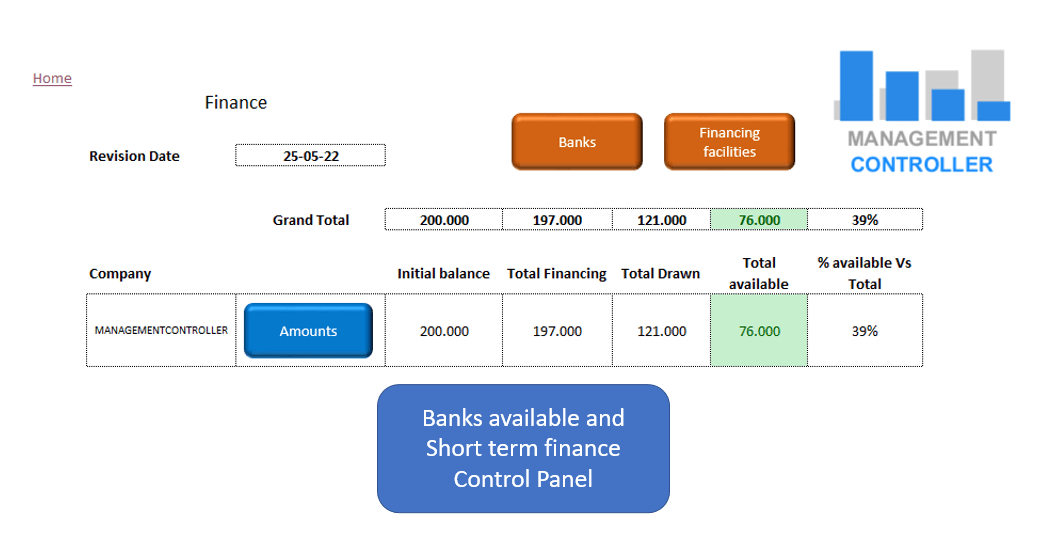
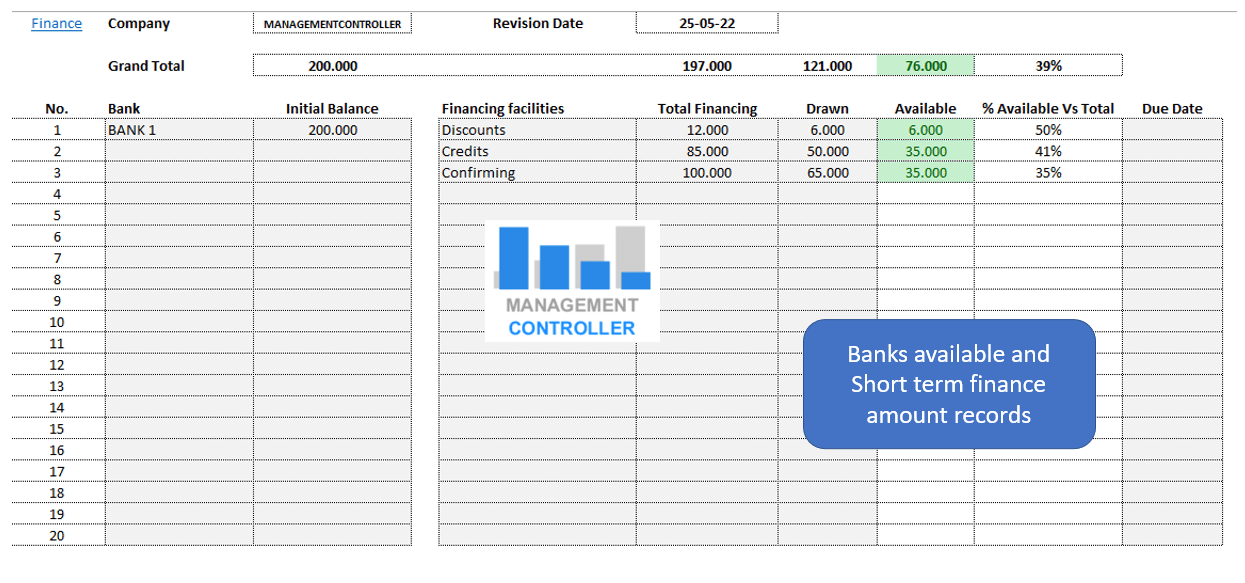
Opening bank balances and available credit lines
-
Accounts receivable and payable portfolios
-
Confirmed sales and purchase orders pending invoice
-
Recurring payments, taxes, and investments
-
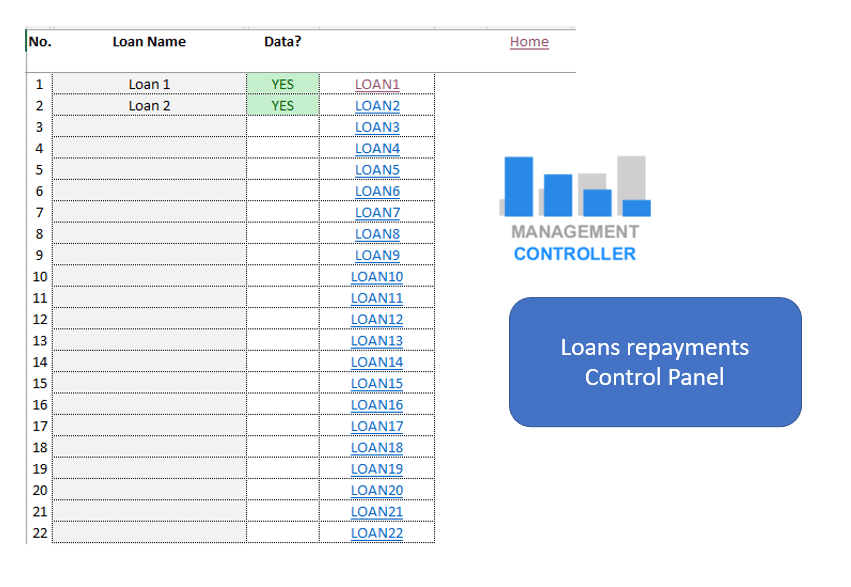
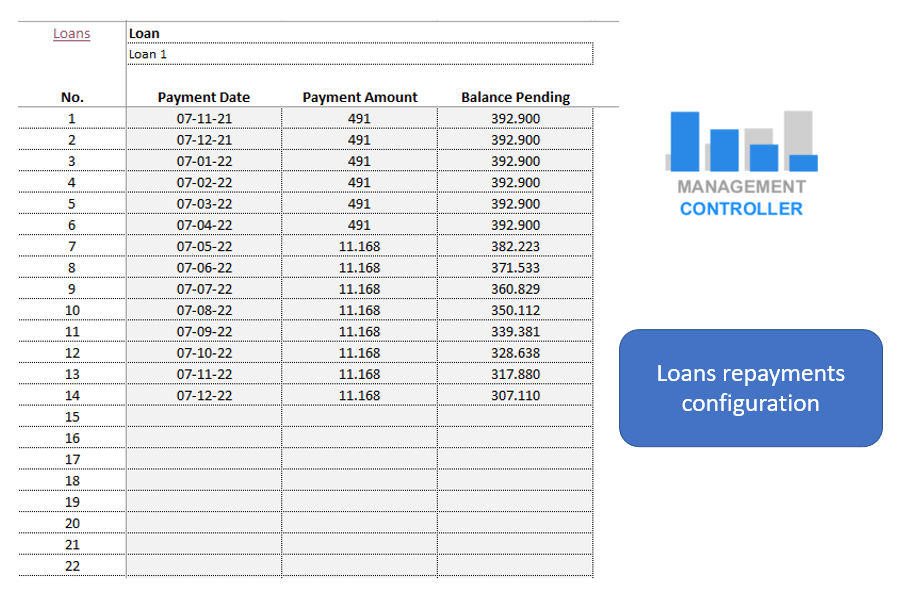
Loan repayments and financing operations
-
Group company consolidation (optional)
All data can be imported automatically from your ERP or accounting software and updated in minutes.
How the M15 Model Works
The Excel Cash Flow Forecast M15 is built around three key data blocks:
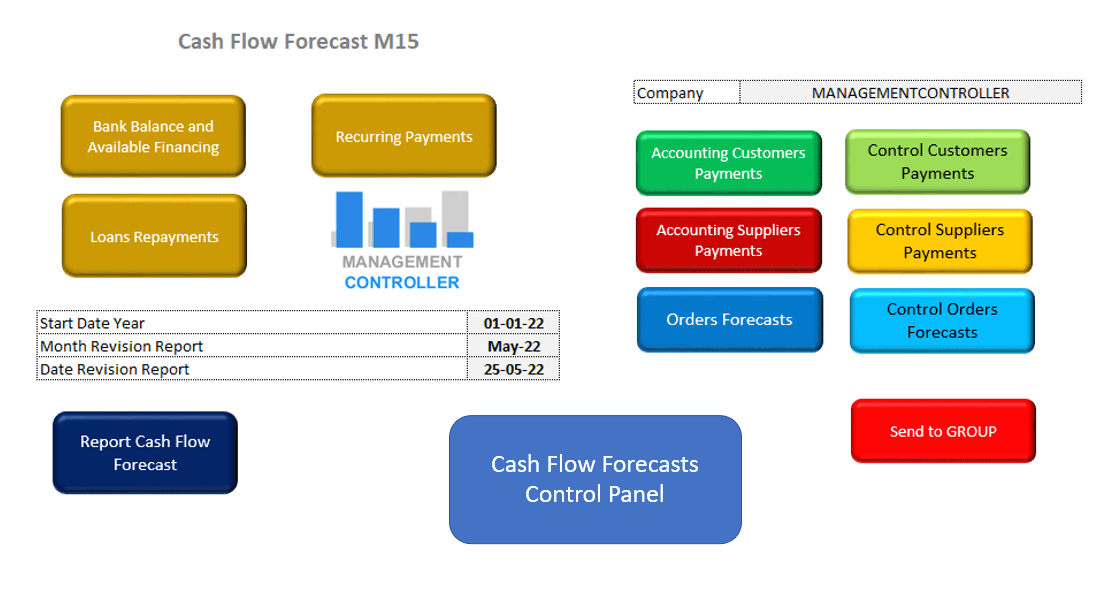
1️⃣ Current balances – bank accounts, credit lines, and financial facilities.
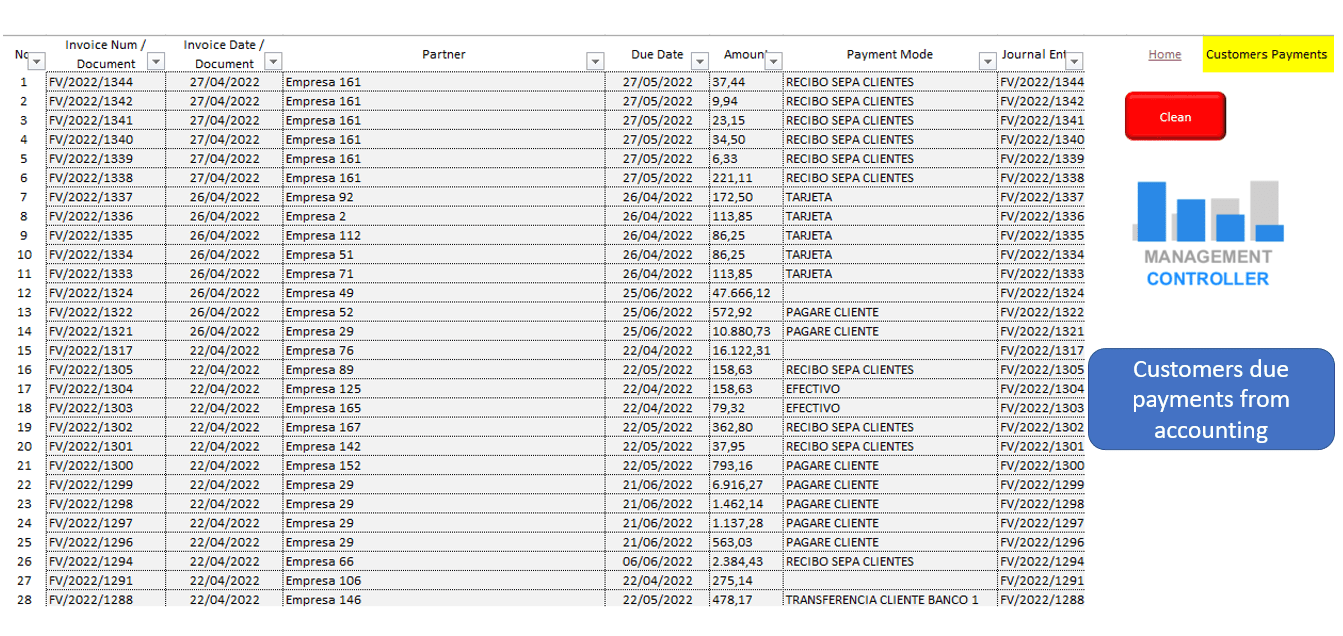
2️⃣ Documents pending collection/payment – invoices or SEPA transactions from the ERP.
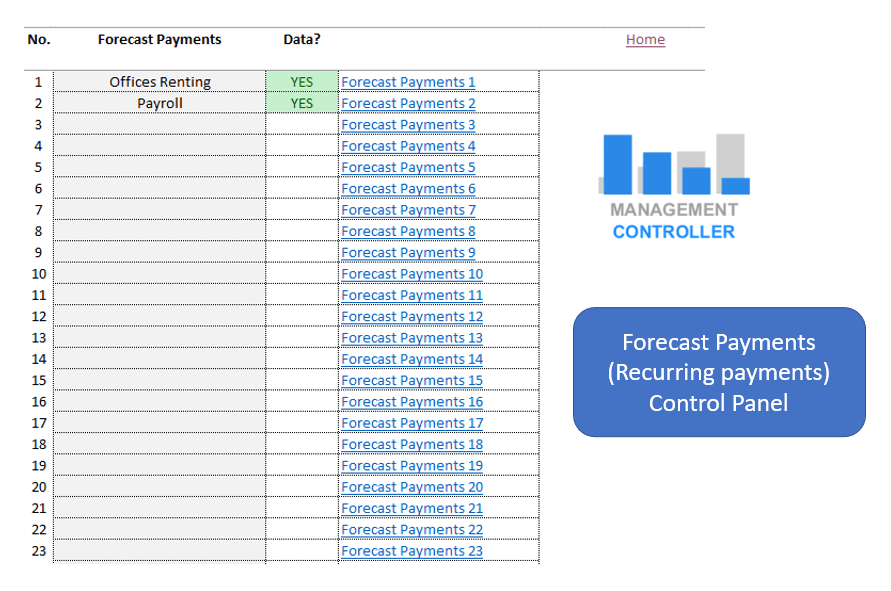
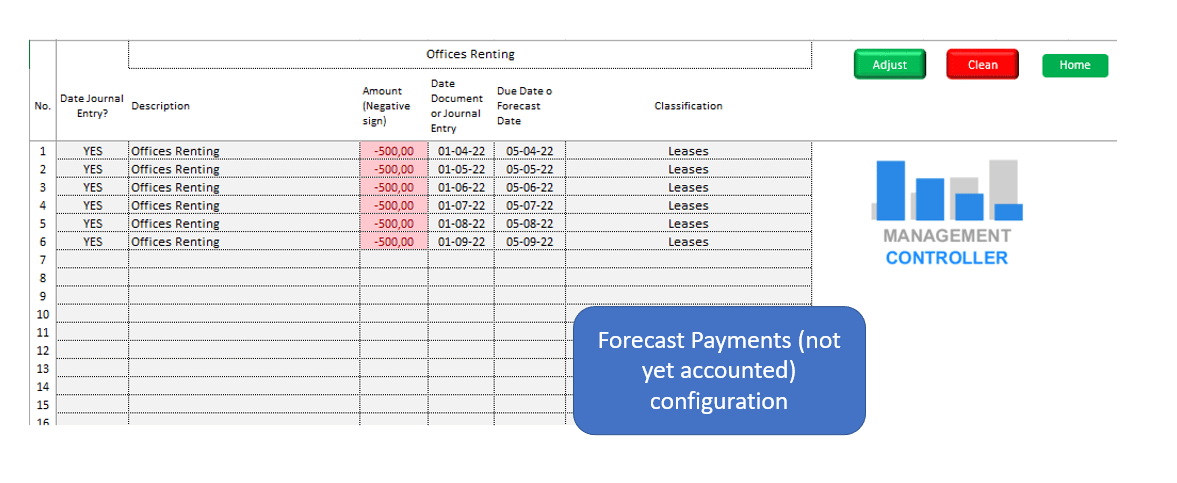
3️⃣ Future recurring payments – payroll, taxes, rents, insurances, utilities, or loan instalments.
Together, these three components provide a complete liquidity projection for the next 12 months, with or without financing coverage.
Profitability vs Liquidity: The Key Relationship
A company can be profitable yet face liquidity issues.
The difference lies in timing — when you collect and when you pay.
That’s why an accurate cash flow forecast is critical.
It bridges the gap between accounting results and real financial health.
Continuous Improvement and Advanced Control
Developed through years of management control and financial consulting, the M15 model is continuously improved to:
-
Deliver clearer, faster insights
-
Reduce report maintenance time
-
Facilitate decision-making for managers and CFOs
It’s more than just an Excel file — it’s a Management Control tool that gives you foresight and strategic advantage.
Get Your Cash Flow Under Control
If you want to:
-
Anticipate liquidity shortages before they happen
-
Take proactive financial decisions
-
Strengthen your financial stability
Then the Excel Cash Flow Forecast Template M15 is the solution you need.
Images the Excel M15 Cash Flow Forecast Report
More information about Controlling Excel Tools
- 3 Methods Selling Price Calculation Free Excel Template – Set Profitable Prices with Precision
- Budget Control for Events M1 Excel Template – Plan, Track, and Analyze Event Finances Easily
- Suppliers Prices Comparative Analysis Free Excel Template – Compare Supplier Prices and Optimize Purchasing Decisions
- Marketing Plan Free Excel Template – Plan, Budget, and Track Your Marketing Actions
- Home Budget M2 Excel Template – Complete Personal and Family Finance Control
- Training Courses Control Free Excel Template – Track Employee Training, Costs, and Performance
- Excel Cash Flow Forecast Template M15 — Advanced Financial Control System
- Cash Flow Control M1 Free Excel Template – Manage Your Treasury and Cash Movements Easily
- Free Excel Digital Marketing Dashboard – Track KPIs and Performance Metrics Easily
- Hotels Excel Cost Calculation – Budgeting, Forecasting, and Profitability Analysis
- Training Management Free Excel Spreadsheet – Plan, Track, and Analyze Employee Training
- Business Plan Budget 5 Years M1 Free Excel Template – Long-Term Financial Planning Made Simple
- Decisions Sales Price Lists Calculation Free Excel Template – Optimize Pricing, Margins, and Profitability
- Excel Budget BOM Manufacturing Costs and Margins M15 – Forecast and Control of Industrial Profitability
- Financial Plan M3 Free Excel Template – Build a Solid Financial Model for Your Business Project
- Multiproducts Breakeven Simulator Free Excel Template – Analyze Profitability Across Multiple Products
- Excel Manufacturing Standard Costs and Margins M10 – Forecast Costing and Profitability Planning
- FREE Excel Balanced Scorecard 2KM15 – KPI Dashboard and Strategic Performance Management
- Control and Justification of Commercial Expenses – Free Excel Template
- Employee Absences Free Excel Template – Track and Manage Employee Leave Efficiently
- Documents Management Free Excel Template M1 – Organize and Track Your Company Files Efficiently
- Restaurant Sales Forecast Free Excel Template – Plan Menus, Costs, and Profit Margins Easily
ERP ODOO Functional Consultant and Controller (Management Control & Controlling)
